
Beyond Test Preparation: Why Number Systems Matter
Number systems appear to be pure mathematics—stripped of context, value-free, and objective. But understanding how we represent, categorize, and manipulate numbers reveals the philosophical and ideological choices embedded in mathematics itself. Number systems aren’t neutral tools; they’re frameworks that shape how we think about quantity, value, and reality.
This exploration goes beyond memorization or test preparation. It examines the conceptual foundations of numerical thinking and asks critical questions about what gets represented, what gets hidden, and whose interests are served by particular numerical frameworks.
Real Numbers: The Assumption of Continuity
All numbers on the number line are called real numbers. They fall into two categories:
- Rational Numbers: All numbers that can be expressed as the ratio of two integers (including all integers and fractions).
- Irrational Numbers: Real numbers that cannot be expressed as ratios of integers (like π, e, and √2).
This classification seems mathematical and innocent. But it carries a significant assumption: that reality can be represented as a continuous line of quantities, and that all meaningful numbers exist somewhere on this line.
This assumption has profound consequences:
- What gets represented: Quantities that can be measured, divided, and compared. These are valued and visible in our mathematical frameworks.
- What gets hidden: Qualities that cannot be quantified—happiness, dignity, meaning, justice, environmental health. By excluding these from our number systems, we implicitly devalue them. If it can’t be expressed as a number, it doesn’t count in policy-making or resource allocation.
- What gets marginalized: Irrational numbers themselves reveal an interesting bias. Mathematicians originally called these “irrational” because they couldn’t be rationally expressed. The label carries a value judgment: rational is good, irrational is problematic. Yet irrational numbers are essential to mathematics and nature. Our terminology reveals how our number system privileges certain forms of knowledge while marginalizing others.
Modulus: The Erasure of Direction
The modulus (absolute value) of a real number represents its distance from zero, always expressed as a positive quantity:
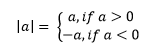
|5| = 5 and |-5| = 5
Both positive and negative five have the same modulus: 5.
This mathematical operation is frequently misunderstood by students, particularly with negative numbers. But the conceptual issue is more important than the calculation: modulus erases directional information. It treats movement in opposite directions as equivalent.
In quantitative problem-solving, this is useful. But in social contexts, modulus becomes ideologically dangerous:
- Wage inequality: A worker earning $20,000 and a manager earning $80,000 might have moduli that suggest they’re equally distant from an average of $50,000. But the direction matters fundamentally—one is being underpaid, the other is being overpaid.
- Poverty and wealth: An absolute value framework makes poverty and extreme wealth seem like mirror images. But their social consequences are utterly asymmetrical. Losing $10,000 when you have $20,000 is catastrophic; gaining $10,000 when you have $1,000,000 is inconsequential.
- Environmental degradation: Modulus treats damage and restoration as equivalent if they’re equal in magnitude. But ecological damage and recovery don’t follow symmetric timelines. Loss is often permanent; recovery is slow or impossible.
By teaching modulus as a neutral mathematical operation without discussing what it obscures, education systems train students to accept frameworks that erase the directional and contextual meaning of quantitative differences.
Order of Operations: The Tyranny of Sequence
BODMAS (Brackets, Orders, Division, Multiplication, Addition, Subtraction) dictates the correct sequence for solving mathematical expressions. It’s presented as an objective rule that ensures correct answers.
But this framework contains an assumption: that there is one correct sequence, determined by authority, that all must follow. Students who deviate from this sequence are marked wrong, even if their logic is sound.
This is educational training in obedience. The message: Don’t question the order. Don’t experiment with alternatives. Follow the prescribed sequence. Authority determines correctness.
- What gets valued: Strict adherence to predetermined order. Consistency with established rules.
- What gets penalized: Creative problem-solving, alternative approaches, questioning why the sequence exists.
In mathematics, BODMAS prevents ambiguity and enables universal communication. But as an educational tool, it teaches subordination to authority—a lesson that extends far beyond mathematics.
Laws of Operations: Revealing What Doesn’t Work
Three laws describe how mathematical operations behave:
- Commutative Law: Addition and multiplication are commutative; order doesn’t matter. 5 + 3 = 3 + 5 and 5 × 3 = 3 × 5.
- Associative Law: Terms can be regrouped without changing results. (2 + 3) + 4 = 2 + (3 + 4).
- Distributive Law: A factor can be distributed across terms. 5(3 + 2) = 5(3) + 5(2).
These laws also reveal what doesn’t work. Subtraction and division are not commutative. This is presented as a mathematical fact. But it’s worth noting: subtraction and division are the operations of taking away, of division and separation.
In contrast, addition and multiplication—operations of combining and growing—are both commutative. The mathematics reflects an ideology: combining is flexible and reversible; separating is rigid and directional. Growth is forgiving; loss is specific.
Odd and Even Numbers: Binary Classification and Its Consequences
Numbers are classified as odd (not divisible by 2) or even (divisible by 2). This binary classification seems straightforward but contains assumptions about categorization itself.
The binary problem: All numbers must fit into exactly two categories. There is no third option, no spectrum, no nuance. This trains thinking in binaries: yes/no, right/wrong, us/them, worthy/unworthy.
The cultural bias: Why is divisibility by two the dividing line? Arbitrary. But once established, it becomes natural, obvious, inevitable. Different cultures and mathematical traditions have made different choices about fundamental categorization. Ours feels universal; others feel exotic.
The rules for operations:
- Odd + Odd = Even
- Even + Even = Even
- Odd + Even = Odd
- Odd × Odd = Odd
- Even × Even = Even
- Odd × Even = Even
Notice what the mathematics encodes: When the odd combines with anything (through multiplication), it becomes even. The odd is subsumed, absorbed, made invisible through combination with the even. Only two cases maintain their nature: odd + odd = even (transformation), and odd × odd = odd (the odd preserves itself only when combining with itself).
This isn’t explicitly taught as ideology. But students internalize the pattern: minority mergers with majority produce majority outcomes. Purity is maintained only in isolation.
Fractions: Quantifying the Partial
A fraction represents a numerical quantity that is not a whole number. It’s a portion of a whole, expressed as numerator divided by denominator.
The property: Multiplying or dividing both numerator and denominator by the same number doesn’t change the fraction’s value. 1/2 = 2/4 = 50/100.
This property is mathematically elegant but ideologically interesting: the same value can be represented infinitely many ways. Change the denominator (change what you’re dividing into), change the numerator proportionally, and the value remains the same.
In social terms: the same living standard can be represented as equally “poor” when compared to the ultra-wealthy (99/100 consumed of available resources) or equally “rich” when compared to those in absolute poverty (1/100 of resources remaining). The fraction’s value doesn’t change; our perception changes based on comparison.
Comparing fractions: If numerators are the same, smaller denominators create larger fractions. This is presented as obvious: if you divide a quantity into fewer pieces, each piece is larger. But it contains an assumption: that smaller divisions are better. Ten pieces is worse than five pieces of the same total. Specialization and consolidation are implicitly valued.
Decimal Fractions: The Illusion of Precision
Decimal fractions use denominators that are powers of 10, creating the appearance of precise, exact representation: 0.5, 0.25, 0.125.
This system feels more precise than regular fractions. 0.333… (representing 1/3) appears to be an approximation or a rounding, when in fact it’s perfectly accurate. The decimal system creates an illusion that some quantities are more precisely representable than others.
In policy and social measurement, this becomes dangerous:
- GDP is presented with decimal precision (2.4% growth)
- Unemployment is stated precisely (4.2%)
- Income inequality is measured exactly (Gini coefficient: 0.48)
These precise decimal representations obscure the inherent uncertainty, approximation, and interpretation involved in collecting and calculating social data. The decimal system creates false confidence in our knowledge.
The Absent Ideology: What We Don’t Question
Educational approaches to number systems typically fail to ask:
- Why does our system use base 10? (Answer: probably because humans have 10 fingers, though other cultures and computers use different bases)
- Why are we taught one number system as the default? (Answer: because it’s culturally dominant and reinforces existing power structures)
- What quantities are we choosing to measure? (Answer: those that serve economic and political interests—GDP, not wellbeing; productivity, not sustainability)
- What are we choosing NOT to measure? (Answer: countless phenomena that don’t reduce to numbers)
- Whose perspectives are centered when we treat numbers as objective truth? (Answer: those with power to define what gets counted)
Critical Perspective: Number Systems as Social Choice
Number systems are not discovered truths. They’re constructed frameworks, refined through centuries, that reflect particular ways of understanding reality. Other number systems exist: binary (base 2), hexadecimal (base 16), and systems used by other cultures.
A critically conscious approach to number systems would:
- Learn the mathematics thoroughly — understand real numbers, operations, modulus, and all technical content
- Question the assumptions — why base 10? Why these categories? What gets excluded?
- Recognize the applications — how these frameworks are used to measure, value, and control
- Understand the limitations — what cannot be measured, what resists quantification, what becomes invisible
- Develop alternatives — explore how different frameworks would change what we prioritize and value
Conclusion: Objectivity as Ideology
Number systems appear to be the most objective, value-free content in mathematics. They’re “just the facts”—numbers don’t lie, they’re universal and unchanging.
But this appearance of objectivity is itself ideological. It obscures the choices embedded in how we represent reality. By treating number systems as inevitable and universal, we hide the political and cultural decisions that created them.
Understanding number systems means understanding not just how to calculate, but how calculation itself shapes our perception of reality, what we measure, what we ignore, and whose interests are served by particular ways of quantifying the world.
The most important lesson about number systems is not a formula or operation. It’s this: whenever someone claims a measurement is objective, ask who decided what to measure, how they decided to measure it, and what remains unmeasured because it doesn’t fit into their numerical framework.